Modular Cooktops Explained: Combining Gas, Induction, and Teppanyaki Modules
What Is a Modular Cooktop and Why Should You Care?
Unlike a traditional cooktop that only has a gas burner or induction hob, a modular cooktop is a flexible system where you can add different cooking modules based on your needs. For example, one day you want to fry a heavy pot with gas, the next day you want precise temperature control with induction, and another day you want to grill with teppanyaki—everything is possible on this one platform!
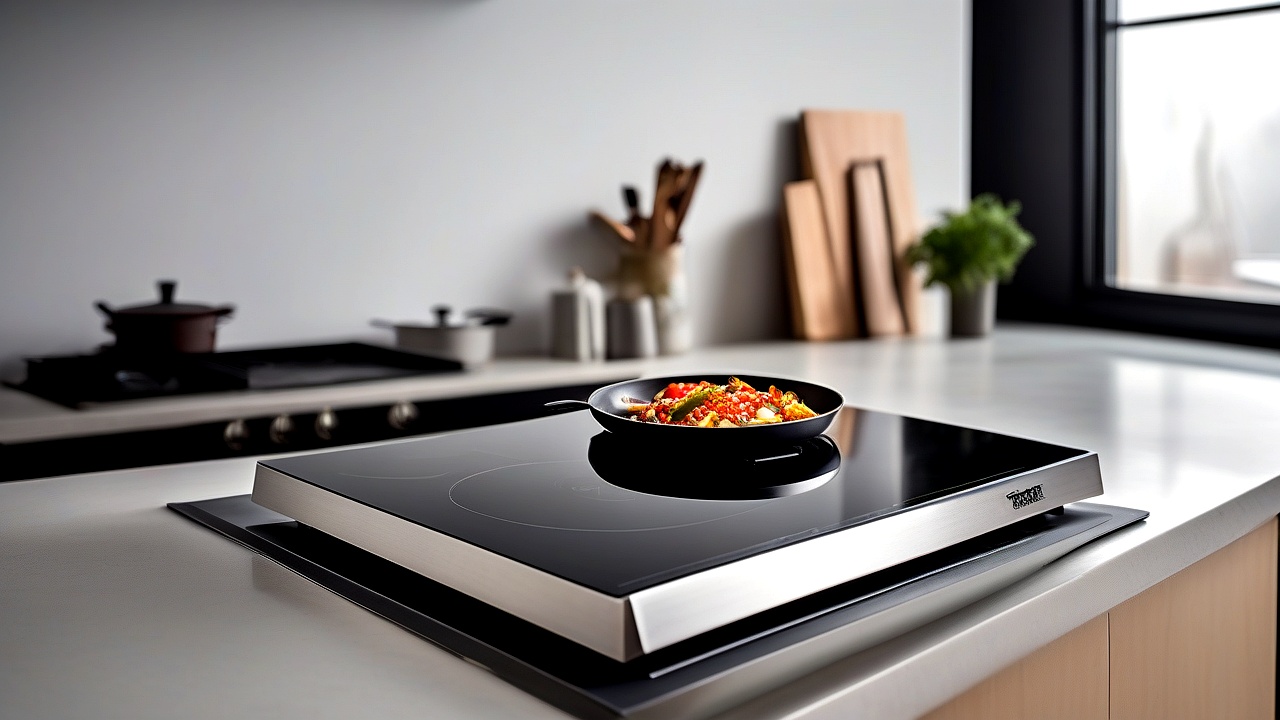
The main advantage of this type of cooktop is customization. When you want to upgrade or try a new cooking style, there’s no need to replace the entire cooktop—just add a new module. As a result, both long-term cost savings and kitchen space optimization are possible.
How Modular Cooktops Work: The Core Technology
Modular cooktops mainly operate using three types of power sources:
- Gas Module: Traditional gas burner connected to natural gas or LPG. Heat output can be adjusted through flame control.
- Induction Module: Heats the base of the pot directly through electromagnetic induction. Energy loss is minimal, and precise temperature control is available.
- Teppanyaki Module: Flat, smooth cooking surface where food can be grilled through direct contact with high heat, similar to a Japanese teppanyaki restaurant.
These modules connect to a common base unit that serves as a power supply and control panel. Some high-end models may include wireless connectivity where the modules can be controlled via a smartphone app.
Gas vs. Induction vs. Teppanyaki: Key Differences at a Glance
| Feature | Gas Module | Induction Module | Teppanyaki Module |
|---|---|---|---|
| Heat Source | Flame (Gas Combustion) | Electromagnetic Induction | Direct Heat (High-Temperature Grill) |
| Heat Control | Manual Flame Adjustment | Digital Temperature Control | Manual Heat Zone Adjustment |
| Energy Efficiency | Moderate (Heat loss through flame) | High (Direct heat transfer) | Moderate (Heat loss through surface) |
| Cooking Speed | Fast (High heat output) | Very Fast (Instant heat) | Fast (High heat retention) |
| Compatibility | All cookware (especially cast iron & stainless steel) | Magnetic cookware only (stainless steel, cast iron) | All cookware (but best for flat-bottomed pans) |
| Safety Features | Flame visibility, auto shut-off | Child lock, auto shut-off, pan detection | Heat-resistant surface, auto shut-off |
| Best For | High-heat cooking, wok dishes, searing | Precision cooking, simmering, boiling | Grilling, stir-frying, teppanyaki-style dishes |
Top 5 Benefits of Owning a Modular Cooktop
Some key advantages of this type of cooktop are:
- Versatility: Three types of cooking styles are available on a single platform. As a result, there is no need to redesign the kitchen repeatedly.
- Space-Saving: A modular system is sufficient without installing multiple cooktops in a compact kitchen.
- Cost-Effective Upgrades: There is no need to replace the entire cooktop if you add a new module. As a result, it serves as a long-term investment.
- Energy Efficiency: Having a high-efficiency option like the induction module helps reduce electricity bills.
- Modern Aesthetics: Sleek, integrated design gives the kitchen a premium look.
Who Should Buy a Modular Cooktop? A Buyer’s Guide
Who is this cooktop most suitable for?
- Home Chefs & Food Enthusiasts: Ideal for those who want to experiment with different types of cuisine.
- Small Kitchen Owners: Those who have limited space but want a versatile cooking solution.
- Tech-Savvy Users: Those who want smart home integration and digital control.
- Frequent Entertainers: who prepare different types of dishes for parties or gatherings.
- Urban Dwellers: whose kitchen space is compact but cooking style is diverse.
On the other hand, if you only do basic cooking and don’t want to experiment with new technology, a traditional cooktop may be sufficient.
How to Choose the Right Modular Cooktop: Key Features to Look For
Things to consider while choosing a good modular cooktop:
1. Power & Performance
- Gas Module: Check the BTU rating. Higher BTU (10,000–18,000 BTU) means more heat output.
- Induction Module: See wattage (1200W–3000W) and power levels (5–10 levels).
- Teppanyaki Module: Consider the number of heat zones and the maximum temperature (400°C–500°C).
2. Compatibility & Cookware Support
- Gas modules work with all types of cookware, but induction requires a magnetic base.
- A flat-bottomed pan works best for teppanyaki.
3. Control & Connectivity
- Touch controls vs. knob controls—choose the one that is comfortable for you.
- Check if smart features like Wi-Fi, app control, or voice assistant compatibility are available.
4. Safety Features
- Auto shut-off, child lock, overheating protection, pan detection (for induction).
- Check for flame failure devices for gas modules.
5. Installation & Maintenance
- Modular cooktops can usually be installed on the countertop.
- Look for removable drip trays and smooth surfaces for regular cleaning.
- Ensure proper ventilation for the gas module.
6. Brand & Warranty
- If you buy from trusted brands like Bosch, Siemens, LG, Samsung, warranty and after-sales service are available.
- Look for a minimum of 2–5 years warranty.
Step-by-Step Guide: Installing a Modular Cooktop
Some preparation should be done before installing a modular cooktop:
- Space Planning: Check the exact dimensions on the countertop. Standard sizes are 30″, 36″, or 48″.
- Power Supply:
- Gas modules require a proper gas line and ventilation.
- Induction modules require a 220V–240V power outlet.
- Teppanyaki modules may require a high-amperage circuit.
- Tools & Materials: Screwdriver, measuring tape, level, gas line connector (if gas module).
- Safety Precautions: Use a soap solution for a gas leak test. Keep the power supply off to avoid electric shock.
Installation Process
- Base Unit Setup:
- Make a cut-out in the countertop that matches the dimensions of the module.
- Mount the base unit securely to prevent vibration.
- Gas Module Installation (if any):
- Connect the gas line and perform a leak test.
- Secure the burners to the base unit.
- Induction Module Installation (if any):
- Connect the power cable.
- Align the coil plate with the base unit.
- Teppanyaki Module Installation (if any):
- Connect the heating element to the base unit.
- Calibrate the temperature sensor properly.
- Final Checks:
- Ensure all modules are properly seated.
- Power on and run a test.
- Check flame consistency for the gas module.
Top 5 Modular Cooktops in 2024: Expert Recommendations
Here is a comparison of some of the best-selling modular cooktops to help you with your buying decision:
| Model | Brand | Modules Included | Key Features | Price Range | Best For |
|---|---|---|---|---|---|
| Miele KM 7753 | Miele | 2x Gas, 1x Induction | Touch controls, auto heat-up, energy efficiency | $2,500–$3,200 | Professional chefs |
| Bosch 800 Series NIT8066UC | Bosch | 4x Induction, 1x Teppanyaki | Wi-Fi, voice control, 4.6kW power | $1,800–$2,400 | Tech enthusiasts |
| Smeg PGF640 | Smeg | 2x Gas, 2x Induction | Retro design, 5 burners, 4.2kW induction | $1,500–$2,000 | Home cooks |
| LG LCE3083ST | LG | 3x Gas, 1x Induction | Smooth surface, 18,000 BTU gas burners | $1,200–$1,600 | Budget-friendly |
| GE Profile PGP9830DJBB | GE | 2x Gas, 2x Induction, 1x Teppanyaki | Flexible configuration, smart diagnostics | $2,000–$2,600 | All-in-one solution |
Common Problems & Quick Fixes for Modular Cooktops
Some common issues may arise with modular cooktops that can be resolved easily. Below are the most frequent problems and their solutions. Follow this guide to quickly fix any issue.
1. Induction Module not working
- Problem: A “No pan detected” error appears, or induction heating does not occur.
- Solution:
- Check if the base of the cookware is magnetic. All induction cookware has a magnetic base that connects to the module.
- Ensure the power cable is properly connected. If there is a loose connection, the module will not work.
- Check the circuit breaker. Overload can trip the breaker.
- See if the module is properly seated with the base unit. If loose, reinstall it.
- Check whether any dirt or grease has accumulated on the sensor of the induction module. Use a soft cloth to clean it.
2. Flame Weak or Irregular on Gas Burner
If the gas burner flame becomes weak or burns irregularly, look for the following reasons:
- Blockage in the burner nozzle: Food particles or grease accumulated in the nozzle can reduce the flame. Open the burner and clean the nozzle.
- Gas supply issue: There may be a leak or pressure issue in the gas line. Check the gas valve and seek help from a technician if necessary.
- Burner alignment: If the burner is not properly aligned with the base, the flame may be irregular. Reseat the burner correctly.
- Air intake issue: If dust accumulates in the air vent of the burner, the flame may decrease. Clean the vent.
3. Surface Overheating of Teppanyaki Module
If the surface of the Teppanyaki module overheats or does not heat evenly, follow the steps below:
- Cooking oil or grease accumulation: Heat transfer decreases if excess oil accumulates on the surface. Clean the surface after each use.
- Heating element problem: If any part of the element is damaged, the module cannot provide uniform heat. Check the element with a technician.
- Temperature control issue: If there is a problem with the thermostat or control panel, the temperature may be irregular. Reset the panel or seek help from a technician.
- Lack of proper ventilation: Heat buildup can occur if there is not enough airflow around the Teppanyaki module. Ensure a proper ventilation system in the kitchen.
4. Control Panel Button Not Working
If none of the control panel buttons work, try the following solutions:
- Panel reset: Most modular cooktops have a reset button. Unplug the panel and reconnect it after 1–2 minutes.
- Clean the buttons: The accumulation of dust or grease on the surface of the panel can reduce button sensitivity. Clean with a soft cloth.
- Check for firmware updates: Some advanced cooktops may require a firmware update. Download and install the latest update from the manufacturer’s website.
- Technical fault: If none of the above steps work, the panel may be damaged. Contact the manufacturer if there is a warranty.
5. Excessive noise or vibration
If excessive noise or vibration occurs while using the modular cooktop, look for the following causes:
- Loose components: If any part of the cooktop is loose, it can cause vibration. Check all screws and bolts and tighten them if necessary.
- Improper installation: If the cooktop is not properly installed with the countertop, it can cause noise. Reinstall it by following the installation guide.
- Using heavy cookware: Using extra heavy cookware can create noise by putting pressure on the induction or gas module. Use lightweight cookware.
- Fan or cooling system issue: Some cooktops have cooling fans that help reduce excess heat. If the fan is blocked, noise may occur. Clean the fan.
When to Call a Professional Technician
If the problem is not solved after trying the above solutions, seek help from a professional technician. Contact a technician in the following situations:
- Electrical issue: If any electrical component (e.g., wiring, control board) is damaged, it cannot be fixed without a technician.
- Gas leak: Seek help from a technician immediately if you smell gas. A gas leak can be dangerous.
- Warranty claim: If the cooktop is covered by warranty, resolve the issue through the manufacturer’s authorized technician.
Preventive Maintenance Tips for Long-Lasting Performance
Regular maintenance is important to extend the life of a modular cooktop and avoid problems. Below are some preventive maintenance tips:
- Regular cleaning:
- Clean the induction or teppanyaki surface after each use. If grease or food particles accumulate, the performance of the module decreases.
- Ensure there is no blockage in the nozzle of the gas burner.
- Clean the surface of the control panel with a soft cloth. Avoid using harsh chemicals.
- Check for wear and tear:
- Regularly inspect all components such as burners, heating elements, cables, and control panels for any damage or loose connections.
- If any part is damaged, replace it quickly.
- Proper ventilation:
- Ensure proper airflow in the kitchen. Heat buildup around the Teppanyaki or induction module reduces performance.
- Use an exhaust fan or chimney.
- Use compatible cookware:
- Use only magnetic base cookware for induction modules. Non-magnetic cookware can damage the induction module.
- Use flat-bottomed cookware for gas burners.
- Scheduled servicing:
- Have the cooktop serviced every 6 months by a professional technician. Minor issues can be caught early, and major damage can be avoided.
Conclusion
Modular cooktops are a great addition to the modern kitchen. Combined with gas, induction, and teppanyaki, these cooktops offer versatility. However, like any electronic or gas appliance, they may have some common issues. If you know the problems discussed above and their solutions, you can easily solve most issues yourself.
The most important thing is to perform regular maintenance and proper care. Cleaning, using proper cookware, and scheduled servicing can extend the life of your modular cooktop significantly. If you cannot solve a problem or a technical issue occurs, seek help from a professional technician.
When choosing the best modular cooktop for your kitchen, pay attention to power, compatibility, safety features, and warranty. At ApplianceSky, we offer a collection of high-quality modular cooktops from various brands. Contact our expert team to select the best product for your needs.
Hopefully, this guide will make your modular cooktop experience easier and more enjoyable. Happy cooking!

About the Author
Hi I am an Engineer I have passed my diploma in Engineering in 2007. Academically I have studied about home appliances and various motors and machineries. In 2012 I have started my blogging and learned a lot of things about home appliances especially washing appliances, washing and cleaning related products, and eequipments. In 2019 I have started my blog https://appliancesky.com to provide my research and experience with my fan and followers.