How the dishwasher drain pump works and how to clear food blockages
Introduction
Your dishwasher is running as usual, but suddenly the water starts pooling or the drain is blocked? This can be caused by food blockage or an object stuck in the drain pump. Many people do not know how the drain pump actually works and when it needs to be cleaned. In this article, we will give you a guide to cleaning food blockages, starting from how the drain pump works. So let’s get started!
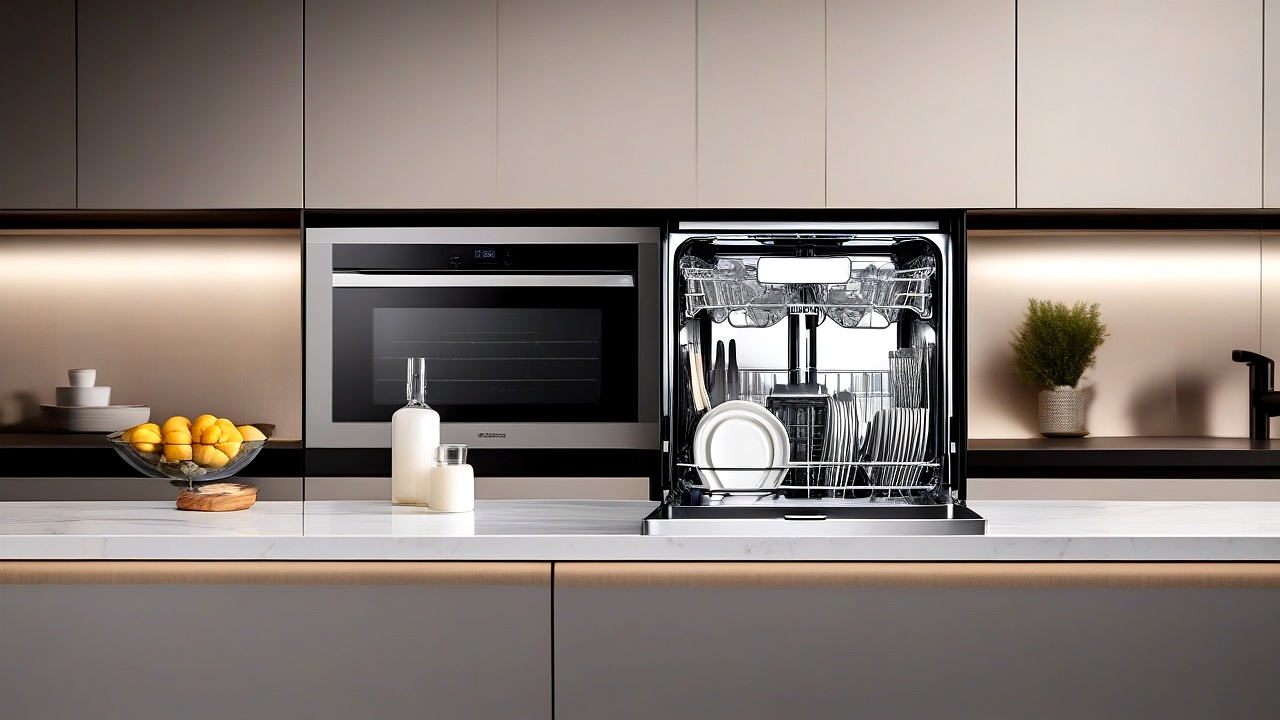
What is a drain pump and how does it work?
The drain pump is an important part of the dishwasher that drains used water and food residue. It is usually located at the bottom of the dishwasher and is operated by a small motor.
Drain Pump Main Parts
- Impeller: It is a rotating part that pushes the water outwards under pressure. Works like a water pump.
- Motor: Provides electrical power to rotate the impeller. Most drain pumps use 120V to 240V power.
- Drain Hose: Carries used water and food residue from the drain pump to an outside drain or sink.
- Check Valve: It allows water to flow in one direction but prevents it from going in the opposite direction. As a result, water cannot flow back from the drain pump.
- Filter & Screen: Keeps large pieces of food from entering the drain pump.
Drain Pump Operation
The dishwasher’s control unit turns the motor on as soon as the drain cycle begins. The motor rotates the impeller, causing water and food residue to flow out through the drain hose. This process is done in several steps:
- Start the drain cycle: The dishwasher is ready to drain the used water.
- Motor on: The control unit supplies power to the motor.
- Rotation of the impeller: The motor rotates the impeller, causing the water to pressurize.
- Water flow: Pressure causes water to flow through the drain hose and into the outside drain.
- Role of check valve: The check valve ensures that water does not flow in the opposite direction.
Why does food blockage occur?
There are several common causes of food blockages in the drain pump. If you know about them, you can address the problem.
Common reasons
- Large pieces of food: Food residue from dishes such as pieces of utensils, food scraps, or fish bones can get stuck in the drain filter.
- Oil and grease: Excess oil or grease accumulates in the drain pipe and gradually creates a blockage.
- Detergent residue: Some detergents can accumulate in the drain pipe after use.
- Foreign objects: Small toys, utensils, or other foreign objects can get stuck in the drain pump.
- Unclean drain filter: If the filter is not cleaned regularly, food residue can accumulate and enter the drain pump.
Symptoms of blockage
There are some common symptoms of a blockage in the drain pump. Observing these will help you resolve the problem quickly.
- Water accumulation: Water may pool under the dishwasher.
- Drain cycle not completed: The drain cycle starts but takes a long time to complete or does not complete at all.
- Strange noises: The drain pump may make unusual noises, such as a grinding or roaring sound.
- Water not draining: Used water remains inside the dishwasher without draining completely.
- Bad smell from drain hose: If food residue accumulates in the drain hose, it can cause an unpleasant odor.
Step-by-step guide to clearing food blockages
Cleaning food blockages in the drain pump is relatively straightforward. By following the steps below, you can fix the problem yourself.
Step 1: Turn off the dishwasher and disconnect the power
First, turn off the dishwasher and disconnect the power by unplugging it. This is very important for safety.
Step 2: Clean the drain filter
The drain filter is usually located at the bottom of the dishwasher. Open it and clean it thoroughly. Most drain filters trap large pieces of food.
- Open the drain filter by turning it counterclockwise.
- Wash the filter thoroughly.
- If there is a foreign object stuck in the filter, remove it.
- Put the filter back in place.
Step 3: Clean the drain hose
If there is any blockage in the drain hose, it should be cleared. You may need a thin wire or pipe cleaner to do this.
- Disconnect the drain hose from the dishwasher.
- Clean the inside of the hose using a fine wire or pipe cleaner.
- If a foreign object is stuck, remove it.
- Reattach the hose.
Step 4: Clean the drain pump
Although the drain pump cannot be directly accessed, it can be cleaned using some methods.
- Locate the drain pump inlet. It is usually located below the drain filter.
- Clean the inlet using a wire or pipe cleaner.
- If a foreign object is stuck, remove it.
Step 5: Start the drain cycle
After cleaning everything, turn on the dishwasher and complete the drain cycle. If the water drains properly, the problem is solved.
Additional Tips for Drain Pump Cleaning
Regular drain pump cleaning reduces the chance of future blockages. Follow the tips below:
Clean regularly
Clean the drain filter and drain hose at least once a month. This will prevent food residue from accumulating.
Remove leftover food
Remove food residue from dishes after each use of the dishwasher. This will prevent the drain from entering the pump.
Use high-quality detergent
Using a high-quality detergent can prevent oil or grease buildup in drain pipes.
Know the location of the drain pump
Knowing the location of the drain pump makes cleaning easier. Most drain pumps are located at the bottom of the dishwasher.
When to seek professional help?
If the problem is not resolved after following the above steps, seek the help of a professional technician. In some cases, the drain pump motor or other parts may be damaged, which requires a specialist.
Symptoms to seek professional help
- Abnormal noises from the drain pump: If the drain pump continues to make unusual noises, it may indicate a motor problem.
- Water not draining: If water remains after the drain cycle is completed, there may be a problem with the drain pump.
- Power disconnection: If the power disconnects repeatedly while the drain pump is running, this may indicate a motor problem.
Common Misconceptions and Cautions
Many people make some common mistakes when cleaning the drain pump. Knowing about these can help you protect yourself and your dishwasher from damage. Many people think that using more detergent will clean more, but it actually does the opposite. Others want to completely open and clean the drain pump, which is not possible in most cases. It is also a mistake to ignore the need for regular cleaning. Let’s learn in detail how to avoid these mistakes and properly clean the drain pump.
Misconceptions
There are several common misconceptions that many people follow when it comes to drain pump cleaning. Being aware of these can help you avoid damaging your dishwasher.
- Using more detergent will clean: Using too much detergent can build up in the drain pipe and create blockages. As a result, the drain pump becomes less efficient and causes more problems later on.
- Drain pump must be disassembled for cleaning: Most dishwasher drain pumps are designed so that they cannot be disassembled for cleaning. However, the entrance can be cleaned and blockages can be prevented by regular cleaning.
- Drain pump does not need to be cleaned: Many people think that the drain pump does not need cleaning. But if not cleaned regularly, the drain pump is more likely to become blocked, which reduces the dishwasher’s performance and increases energy consumption.
- Washing with hot water is a must: Washing with hot water helps a bit, but it is not a complete solution. Hot water alone is not enough to clean food residues, especially greasy ones. Specific cleaning products should be used for this.
Warnings
Some important precautions should be taken while cleaning the drain pump. By following these, you can protect yourself and your dishwasher from damage.
- Disconnect the power: Always disconnect the power when cleaning the drain pump. This protects against electric shock and enables safe operation.
- Check the manual before cleaning: Every dishwasher has cleaning instructions in its manual. If you follow it, you can work properly and safely.
- Avoid using sharp tools: Avoid using any metal or sharp tools while cleaning the drain pipe or inlet. This may damage the drain pipe.
- Be careful using chemical cleaners: Different types of chemical cleaners are available in the market, but be careful when using them. Using excess chemicals can damage drain pipes and is also harmful to the environment.
- Check after cleaning: Run the drain cycle after cleaning to see if everything is working properly. If a problem occurs, try cleaning again.
Proper Tools for Drain Pump Cleaning
Drain pump cleaning requires certain tools. Using them can make the job easier and safer.
- Soft brush: Use a soft brush to clean drain filters and inlets. It will help to clean food residue and grease.
- Cleaning products: Use special dishwasher cleaning products. These will help remove dirt and grease from the drain pipe.
- Plastic scraper: Use a plastic scraper instead of using any metal tools. It will not damage the drain pipe.
- Gloves: Wear gloves when cleaning. This will protect your hands from dirt and chemicals.
How to protect drain pump after cleaning?
Following a few steps after cleaning the drain pump will keep it in good condition for a long time and reduce the chance of re-clogging.
- Clean regularly: Clean the drain pump at least once a month. This will reduce the possibility of food residue accumulation and blockage.
- Remove food residue: Remove food residue from dishes after each use of the dishwasher. This will reduce the possibility of food residue accumulation in the drain pump and blockage.
- Use good-quality detergents: Use good-quality detergents that wash off easily and do not clog drain pipes.
- Learn about the location of the drain pump: Learn about the location of the drain pump from your dishwasher’s manual. This will facilitate future cleaning.
- Check after cleaning: Run the drain cycle after cleaning to see if everything is working properly. If a problem occurs, try cleaning again.
Conclusion
Cleaning the dishwasher drain pump is an important task that many people neglect. But not cleaning regularly increases the chance of blockages in the drain pump, which reduces the dishwasher’s performance and increases energy consumption. In this article, we discuss in detail how drain pumps work, causes of food blockages, step-by-step cleaning guides, additional tips, and common misconceptions and warnings.
Remember, there are some common misconceptions to avoid when cleaning a drain pump. For example, using too much detergent, trying to completely open the drain pump to clean it, or assuming that washing with hot water will suffice. Also, disconnect the power supply, follow the manual, and avoid using sharp tools during cleaning.
After cleaning, it is important to clean the drain pump regularly, remove food residue, use high-quality detergents, and know the location of the drain pump. If for any reason the drain pump is having trouble clearing or if blockages occur repeatedly, professional help should be sought.
So, clean the drain pump regularly and follow the instructions above to maintain the longevity and performance of your dishwasher. This way you can enjoy a functional and efficient dishwasher for a long time.

About the Author
Hi I am an Engineer I have passed my diploma in Engineering in 2007. Academically I have studied about home appliances and various motors and machineries. In 2012 I have started my blogging and learned a lot of things about home appliances especially washing appliances, washing and cleaning related products, and eequipments. In 2019 I have started my blog https://appliancesky.com to provide my research and experience with my fan and followers.