Compact vs Full-Size Electric Burners: Which One Fits Your Kitchen Best?
Understanding Your Cooking Needs: Why Size Matters
Your kitchen space determines which size electric burner you should choose. Compact electric burners work well in small kitchens or with limited counter space, while full-size units provide more cooking space and flexibility. Let’s see which type of burner will work best for you.
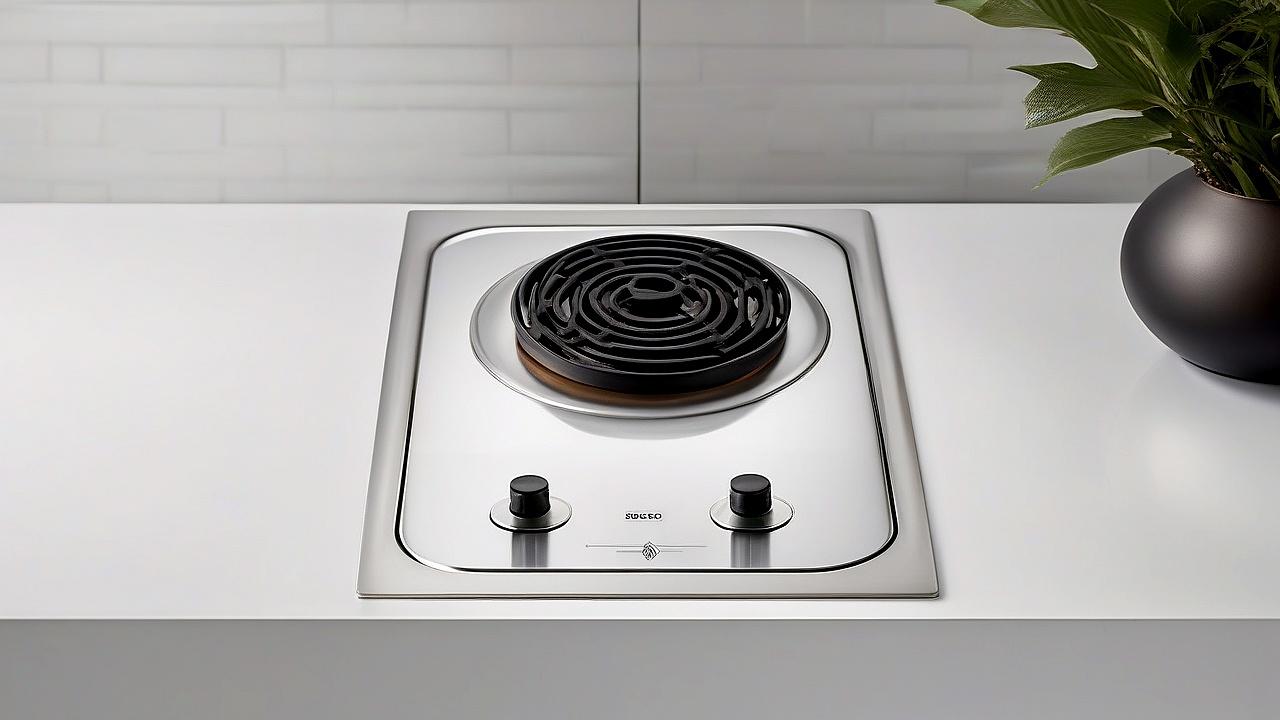
Compact Electric Burners: Small But Powerful
Compact electric burners typically have 1-2 burners and are ideal for small apartments or dorms. Since they are portable, they can be moved easily and stored without taking up much space.
Pros of Compact Electric Burners
- Space-saving: Works well in small kitchens or tight counter spaces.
- Portability: Can be moved anywhere, even used for camping or outdoor cooking.
- Energy-efficient: Uses less power, which helps reduce electricity costs.
- Quick heating: Heats up faster than many other burners.
- Affordable: Costs less than full-size units.
Cons of Compact Electric Burners
- Limited cooking space: Can’t accommodate multiple pots at once.
- Lower power output: Typically ranges from 1200W-1800W, which is less powerful than full-size burners.
- Less durable: Heavy use may cause damage over time.
Full-Size Electric Burners: More Power, More Convenience
Full-size electric burners usually have more than 4 burners and are designed for larger cooking spaces. They work well in restaurants or spacious home kitchens.
Pros of Full-Size Electric Burners
- More cooking space: Can hold multiple pots at once.
- Higher power output: Typically ranges from 2000W-3000W, providing more power.
- Durable: Built to last even with frequent use.
- Professional-grade: Suitable for restaurant or professional kitchen use.
Cons of Full-Size Electric Burners
- Bulky: Takes up more space and can be difficult to store.
- Expensive: Costs more than compact burners.
- Higher energy consumption: Uses more power, which increases electricity costs.
Technical Comparison: Compact vs Full-Size Electric Burners
Let’s compare the technical differences between the two types of burners:
| Feature | Compact Electric Burners | Full-Size Electric Burners |
|---|---|---|
| Number of Burners | 1-2 | 4+ |
| Power Output (Wattage) | 1200W-1800W | 2000W-3000W |
| Size (Approx.) | 12″ x 12″ | 24″ x 24″+ |
| Portability | High | Low |
| Energy Efficiency | High | Medium |
| Price Range | $50-$200 | $300-$1000+ |
Which One Should You Choose? Buying Guide
Your choice depends on your cooking habits and kitchen space. Let’s see which type of burner fits your needs.
Choose Compact Electric Burners If:
- Your kitchen is small or has limited counter space.
- You often cook outdoors or while camping.
- You want to minimize power usage.
- Your budget is limited.
Choose Full-Size Electric Burners If:
- Your kitchen needs more cooking space.
- You cook professionally or need a burner for a restaurant.
- You want higher power output and better durability.
- Your budget allows for a higher investment.
Top Models Comparison: Compact vs Full-Size
Let’s compare some popular compact and full-size electric burners available:
| Model | Type | Burners | Power Output | Price Range | Key Features |
|---|---|---|---|---|---|
| Duxtop 1800W Portable Induction Cooktop | Compact | 1 | 1800W | $80-$120 | Portable, energy-efficient, digital controls |
| Cuisinart CB-30 Cast-Iron Single Burner | Compact | 1 | 1500W | $60-$100 | Cast-iron surface, even heating |
| GE PHP903 Electric Cooktop | Full-Size | 4 | 3000W | $400-$600 | Smooth surface, precise temperature control |
| KitchenAid KEC907ER Electric Cooktop | Full-Size | 5 | 2800W | $500-$800 | Induction technology, easy-to-clean surface |
Maintenance and Safety Tips for Electric Burners
Maintenance and safety are important for long-term use of any electric burner. Here are some key tips:
Maintenance Tips
- Regular cleaning: Clean the burner surface and burners after each use.
- Check power cord: Inspect the power cord regularly and replace it if damaged.
- Inspect heating elements: Replace damaged heating elements promptly.
- Store properly: Allow compact burners to cool before storing.
Safety Tips
- Use proper cookware: For induction burners, use induction-compatible cookware.
- Keep away from water: Avoid contact with water to prevent damage.
- Unplug when not in use: Disconnect the burner after use.
- Check for recalls: Visit the manufacturer’s website for recall updates.
Final Verdict: Compact vs Full-Size Electric Burners
Compact and full-size electric burners each have distinct advantages and disadvantages. Compact burners work well in small kitchens or with limited budgets, while full-size burners provide more cooking space and power output.
Choose the right burner based on your kitchen needs and budget. If you have a small kitchen and don’t need high power, a compact burner may be best. If you have a large kitchen and cook professionally, a full-size burner is the better choice.
Frequently Asked Questions (FAQs)
Some Common Questions About Compact vs Full-Size Electric Burners
You may have questions about compact vs full-size electric burners. Here are answers to help you make the best decision.
1. Does a compact electric burner support induction technology?
Yes, most compact electric burners support induction technology. Examples include the Duxtop 1800W Portable Induction Cooktop, Cuisinart CB-30 Cast-Iron Burner, and Breville BSC540XL Smart Boil. These burners heat quickly and efficiently through induction. The advantage of induction is that it is more efficient and safer because it heats the pan directly.
2. Are full-size electric burners portable?
No, full-size electric burners are generally not portable. They are heavy and large, making them difficult to move. Some models, like those in the GE Café Series, may have wheels or handles for easier transport, but they still aren’t as portable as compact burners.
3. What is the power output of compact electric burners?
Compact electric burners typically have a power output between 1200W-1800W. Some high-powered models reach up to 2000W. For example, the NuWave Precision Induction Cooktop has an 1800W output. Higher power allows faster heating and more heat production.
4. What is the power output of full-size electric burners?
Full-size electric burners usually have a power output between 2000W-3000W. Some professional models reach up to 3600W. For example, the Wolf CG36TLFX has a 3600W output. Higher power allows faster cooking and the ability to handle larger quantities of food.
5. Are compact electric burners suitable for outdoor cooking?
Yes, compact electric burners are ideal for outdoor cooking because they are portable. They can be used for camping or backyard parties. However, check the burner’s IP rating to ensure it is protected against water and dust for outdoor use.
6. Are full-size electric burners suitable for restaurants?
Yes, full-size electric burners are well-suited for restaurants or professional kitchens. They offer higher power output and can cook larger quantities of food. Commercial-grade burners are also more durable and reliable. When selecting burners for restaurants, consider power output, durability, and safety features.
7. What is the price of compact electric burners?
Compact electric burners typically cost between $50-$200. High-end or branded models may range from $200-$400. For example, the Duxtop 1800W Portable Induction Cooktop costs around $100-$150. Price varies based on brand, features, and power output.
8. How much do full-size electric burners cost?
Full-size electric burners typically cost $300-$1000+. High-end or professional models may range from $1000-$3000. For example, the Wolf CG36TLFX costs around $2500-$3000. Price varies based on brand, features, power output, and durability.
Some More Important Questions About Compact vs Full-Size Electric Burners
9. Do compact electric burners offer the convenience of multiple burners?
Yes, some compact electric burners offer multiple burners. Models like the Duxtop 9600LS have multiple heating zones to heat several pots at once. However, these are usually larger than standard compact burners.
10. Are full-size electric burners energy-efficient?
Full-size electric burners are generally not energy-efficient because they consume more power. However, some modern models include energy-saving features like automatic shut-off, precise temperature control, and induction technology. Induction burners are much more energy-efficient because they heat the pan directly, reducing heat loss.
11. Do compact electric burners support technologies other than induction?
Yes, compact electric burners support other heating technologies, such as radiant, halogen, and coil heating. However, induction burners are more efficient and safer. Radiant burners are more affordable and widely available.
12. Are full-size electric burners maintenance-free?
No, full-size electric burners require regular maintenance. Tasks include cleaning the surface, inspecting heating elements, and checking electrical connections. Without proper maintenance, performance may decline, and safety risks may increase.
Conclusion
In comparing compact vs full-size electric burners, we see that each type has its own benefits and drawbacks. Compact burners are small, portable, and affordable, making them ideal for small households or kitchens. Full-size burners offer more power, durability, and are better suited for professional kitchens.
Your choice should depend on your cooking habits, budget, and kitchen space. If you have a small family or need a burner for outdoor cooking, a compact electric burner may be the best option. If you need a burner for a professional kitchen or large-scale cooking, a full-size electric burner is the better choice.
Before purchasing, consider power output, energy efficiency, safety features, and warranty. Regular maintenance and cleaning will also help maintain performance and durability.
We hope this guide has given you a clear understanding of compact vs full-size electric burners. If you have further questions or need help choosing a specific burner, feel free to contact us. Thank you from ApplianceSky!

About the Author
Hi I am an Engineer I have passed my diploma in Engineering in 2007. Academically I have studied about home appliances and various motors and machineries. In 2012 I have started my blogging and learned a lot of things about home appliances especially washing appliances, washing and cleaning related products, and eequipments. In 2019 I have started my blog https://appliancesky.com to provide my research and experience with my fan and followers.