Ice Maker Seasonal Care Guide: Protect Your Machine in Summer & Winter
Why Seasonal Care Matters for Your Ice Maker
A good ice maker adds convenience to your kitchen—helping you make cold water, smoothies, or cocktails. But many people do not know that this appliance needs special care with seasonal changes. Due to high heat in summer and freezing temperatures in winter, the performance, lifespan, and even safety of the ice maker can be affected.
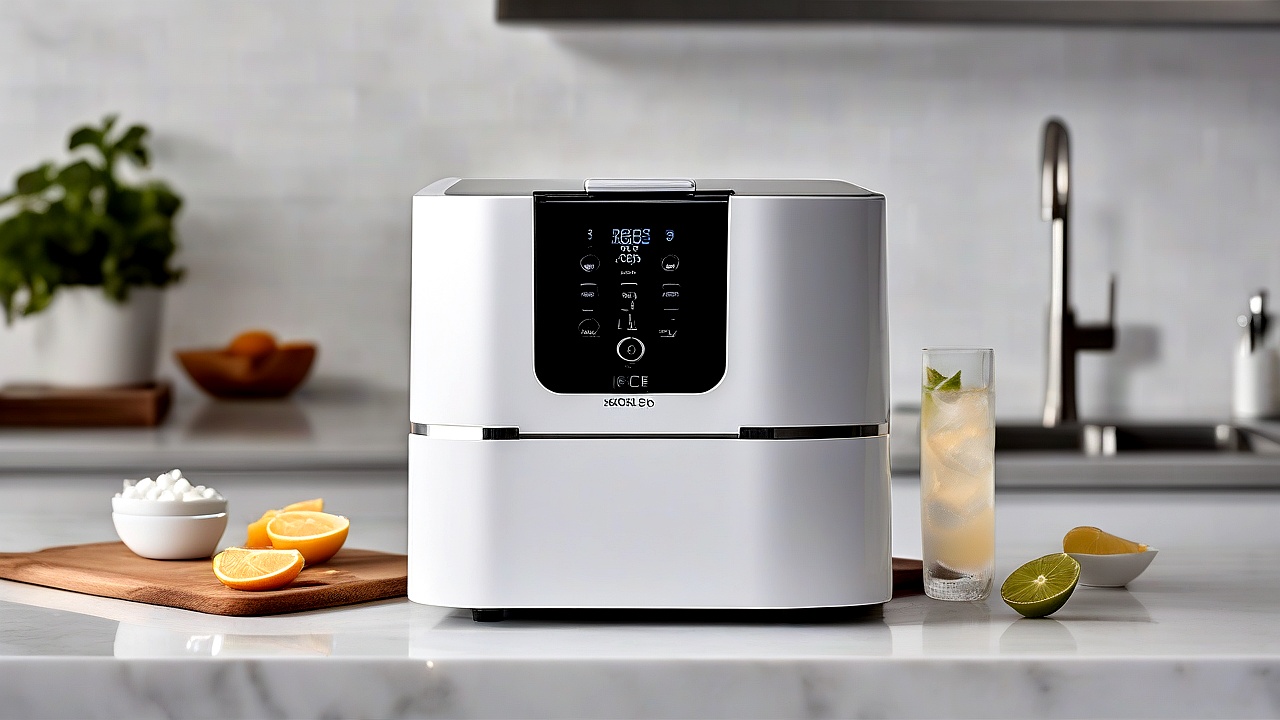
In this guide we will discuss how following different care routines for your ice maker in summer and winter will keep the machine functional for a long time and help avoid unexpected breakdowns.
Summer Protection Strategies for Ice Makers
In summer, the temperature rises, stressing the ice maker. More heat causes the machine to consume more energy, take longer to make ice, and even run the risk of overheating. So it is important to follow some special care routines for your ice maker in summer.
Optimal Placement & Ventilation
Place the ice maker where:
- It does not get direct sunlight (such as in a corner of the kitchen where light is minimal)
- There is proper ventilation (leave at least 2-3 inches of free space around the machine)
- Humidity is not high (avoid places like bathrooms or laundry rooms)
If your ice maker is integrated with the fridge, keep the back panel of the fridge clean to reduce stress on the fridge compressor.
Temperature & Humidity Control
The ideal temperature for an ice maker is 50°F to 90°F (10°C to 32°C). If the kitchen temperature exceeds 90°F, then:
- Keep the fridge temperature between 37°F and 40°F
- Use a dehumidifier to reduce humidity (if humidity is high in the kitchen)
- If the ice maker water line temperature is over 70°F, change the water filter (a clogged filter slows ice making)
Regular Cleaning & Maintenance
Due to heavy use in summer, bacteria or mold may accumulate inside the ice maker. So:
- Monthly deep clean: Clean the ice bin, water reservoir, and ice mold with a vinegar solution (1:1 ratio). Then rinse with clean water.
- Water filter replacement: If there are manufacturer instructions, replace the water filter every 6 months.
- Condenser coil cleaning: Clean the condenser coil of the fridge (which is at the back or bottom of the fridge) every 3 months with a vacuum cleaner.
Energy Efficiency Tips
In summer, electricity bills are high, so to reduce the energy consumption of your ice maker:
- Place the ice maker inside the fridge (if integrated with the fridge)
- Use an energy-efficient model (e.g., an ice maker with an inverter compressor)
- Make ice in small batches without filling the ice maker completely (filling it completely puts more pressure on the compressor)
Winter Protection Strategies for Ice Makers
The ice maker’s performance may decrease as the temperature drops in winter. Many people think that there is no need to take care of the ice maker in winter, but some problems may occur due to freezing temperatures.
Preventing Freezing Issues
If the ice maker is integrated with the fridge, then:
- Keep the fridge temperature between 37°F and 40°F (too low may stop ice making)
- Remove ice regularly to prevent ice buildup inside the ice bin
- Place a heat source (such as a heater) near the fridge to avoid freezing of the water line
Humidity & Condensation Control
Humidity is lower in winter, but condensation can still occur. This results in:
- Moisture can accumulate inside the ice maker, which can cause mold or bacteria
- Ice can build up inside the water line, causing water flow to stop
To avoid these problems:
- Keep proper ventilation around the ice maker
- Regularly clean the ice bin and water reservoir
- If condensation is high, check the fridge door seal (a leaky seal may cause condensation)
Winterizing Your Ice Maker
If you go on a long-term vacation or keep the fridge off, then:
- Empty the ice bin completely before turning off the power to the fridge
- Close the water line valve and drain the residual water
- If there is any moisture inside the ice maker, clean and dry it
Common Seasonal Problems & Troubleshooting
Some common problems with ice makers may occur in summer and winter. Below are their solutions:
Summer Problems & Fixes
| Problem | Possible Cause | Solution |
|---|---|---|
| Ice formation slows down | High temperature, clogged water filter | Check the temperature of the fridge, change the water filter |
| Bad smell on ice | Bacteria or mold growth | Deep clean with vinegar solution |
| Overheating | Poor ventilation, dirty condenser coil | Clean condenser coil, ensure proper ventilation |
| Cracks or unusual shape in ice | Water pressure low, water line frozen | Check water pressure, insulate water line |
Winter Problems & Fixes
| Problem | Possible Cause | Solution |
|---|---|---|
| Ice production stopped | Fridge temperature is too low | Keep the fridge temperature between 37°F and 40°F |
| Water line frozen | Extreme cold temperature | Insulate water line, place heat source near fridge |
| Condensation is high | Low humidity, leaky door seal | Check door seal, keep proper ventilation |
| Unusual texture in ice | Water line frozen, water pressure low | Insulate water line, check water pressure |
Seasonal Maintenance Checklist
If you follow this simple checklist, your ice maker will perform well in all seasons:
Summer Maintenance Checklist
- Check placement of ice maker (avoid direct sunlight and humidity)
- Keep the fridge temperature between 37°F and 40°F
- Change water filter every 6 months
- Clean the condenser coil every 3 months
- Clean ice bin and water reservoir monthly
- Use an energy-efficient model
Winter Maintenance Checklist
- Keep the fridge temperature between 37°F and 40°F
- Empty the ice bin regularly
- Insulate water line
- Check door seal (if there is leakage, replace the seal)
- If condensation is high, keep the fridge door open
- Empty the ice bin before turning off the power to the fridge on a long-term vacation
When to Call a Professional
If, after following the above tips, the ice maker still has problems, seek the help of a professional technician. Especially if the following problems occur:
- Ice maker’s compressor is not working
- Water line is completely frozen
- Unusual noise inside the ice maker
- Error code appearing (e.g., E1, E2)
- Ice formation has completely stopped
Final Tips for Long-Lasting Ice Maker
To increase the lifespan of an ice maker and get reliable performance in all seasons, it is important to take some extra care beyond basic maintenance. Many people think that regular cleaning and proper placement are enough, but there are some other important things that can extend the life of your ice maker by several years. Let’s look at those helpful tips.
First comes the water filter. Many people think that there is no need to change the filter, but it is better to replace it regularly. Because bacteria and impurities accumulate in the old filter, which affects the taste of ice. Most ice makers come with a carbon filter, which should be replaced every 6 months. If your machine does not have a separate filter, use reverse osmosis water. Also, check the water inlet valve regularly—if there is a clog or leak, ice formation will be delayed or may not occur at all.
Monitoring Ice Quality & Taste
The taste and quality of ice depend mainly on three things: water quality, freezing temperature, and storage condition. If you notice any abnormalities in the taste of your ice (such as musty or chlorine odors), check first:
- Water source: Use filtered or bottled water instead of tap water.
- Ice bin cleanliness: Clean the bin after every ice removal. Bacteria buildup on old ice can cause odors.
- Temperature consistency: Keep the fridge temperature between 37°F and 40°F. If it’s too cold, the ice hardens, and if it’s too warm, it slows down.
Also, if you see that the ice is becoming cloudy instead of being completely clear, then the water mineral content is probably high. In this case, you can use a water softener or change the filter regularly.
Smart Usage for Extended Lifespan
To improve the performance and lifespan of your ice maker, adopt some smart habits, such as:
- Don’t overfill the ice bin: Many people fill the entire bin, but leaving some space for ice is better. As a result, the ice does not stick together and is easily separated.
- Use the ice maker regularly: If the ice maker is not used for a few days, the water becomes stagnant, and bacteria can grow. So keep it on at least once a week.
- Power surge protection: If there is a sudden power outage or voltage fluctuation, the sensitive components of the ice maker (such as the compressor or control board) may be damaged. Use a surge protector in this case.
- Seasonal deep cleaning: At least twice a year, open the whole machine and clean all the internal parts. Keeping the evaporator coils and condenser fan clean helps maintain energy efficiency.
When to Replace Parts vs. Repair
Repairing isn’t always the best option—there are some parts that are worth replacing if they fail repeatedly. For example:
| Part Name | Symptoms of Failure | Repair vs. Replace |
|---|---|---|
| Water Inlet Valve | Ice is not making, but there is water supply | Usually repairable, but if problems recur, replace |
| Ice Maker Assembly | Ice not creating, no sound | It is better to replace if it fails completely |
| Thermostat | Ice is becoming too hard or not forming at all | Repairable, but replace if accuracy is lost |
| Compressor | Ice is not making, but the machine is running | Replacement is necessary—it’s the most expensive part of the ice maker |
Also, if you find that the machine is repeatedly showing an error code (such as E1, E2, etc.), refer to the manufacturer’s manual first. Many times, even if it is a small problem, the error code can be misleading.
Finally, one important thing—warranty. Many people forget about the warranty after buying a new ice maker. But remember, most brands offer a 1 to 5 year warranty. If there is a problem, do not attempt to fix it yourself; seek professional help. If it is under warranty, the cost will also be saved, and the machine will remain in good condition.
Conclusion
Extending the life of an ice maker depends mainly on three things: proper maintenance, smart usage, and seasonal care. If you want to enjoy cold, clear ice for years, regular cleaning, water quality control, and maintaining temperature balance are essential. Also, if a part fails repeatedly, it’s best to replace it—because repeated repairs can eventually damage the machine completely.
Another important thing is warranty and professional help. If a problem occurs, get help from an expert quickly instead of trying to fix it yourself. This will keep the machine in good condition and save you time and money.
Finally, remember that an ice maker is an investment. With a little care and attention, it will work reliably for years. So follow all the above tips, and do deep cleaning at least once every year. Then you’ll see your ice maker will continue to provide cold water and delicious ice all season—day after day, year after year.

About the Author
Hi I am an Engineer I have passed my diploma in Engineering in 2007. Academically I have studied about home appliances and various motors and machineries. In 2012 I have started my blogging and learned a lot of things about home appliances especially washing appliances, washing and cleaning related products, and eequipments. In 2019 I have started my blog https://appliancesky.com to provide my research and experience with my fan and followers.