High-End vs Budget Washers: Do you really know the difference? Which one to buy?
Introduction: Things to know before buying a washer
Thinking about adding a new Washing Machine to your home laundry room? So the first question that comes to mind is – What is the difference between High-End vs Budget Washers? Many people think that if you pay a higher price, you can get a better washer. But is it true?
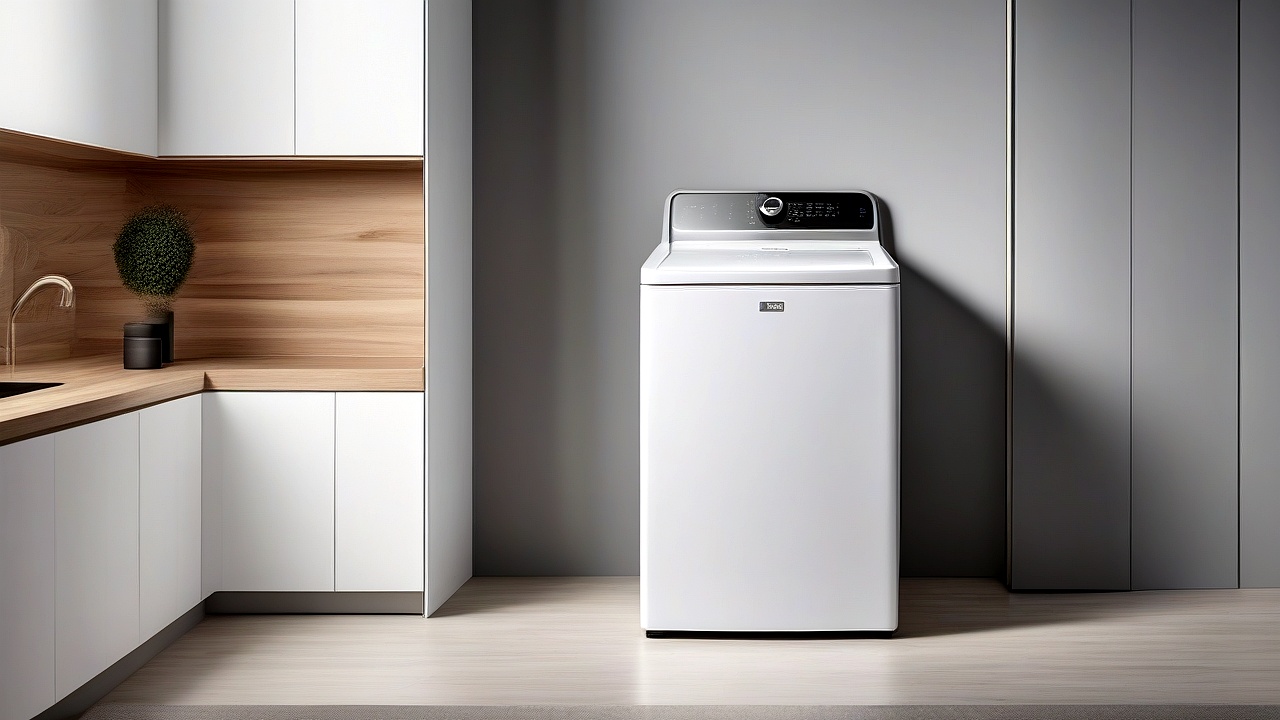
In this article we will discuss the key differences between Premium Washers and Budget Washers, to help you decide which one is right for you. Here are some important tips that will come in handy while shopping.
Types of washers and their importance
First let’s know about the main types of washers. Two types of washers are commonly seen:
- Front-Load Washers – These are more energy efficient, have higher capacity and have less harmful effect on clothes.
- Top-Load Washers – These wash quickly, are relatively inexpensive, and are easy to use.
There are also Semi-Automatic and Fully Automatic washers. But today’s discussion is only about Fully Automatic washers, as these are the most commonly used ones today.
High-End Washers: What’s Available at a High Price?
When you look at Premium Washers, you will find that they have many advanced technologies and features. Let’s know the features of these washers:
1. Advanced Technology & Smart Features
Higher priced washers usually have:
- Wi-Fi Connectivity – You can control the washer through the mobile app.
- AI-Based Wash Programs – The washer itself understands the type of clothes and adjusts the wash cycle accordingly.
- Self-Cleaning Function – Many premium washers have a self-cleaning tub feature.
- Steam Wash Technology – Features a steam wash for disinfection and wrinkle reduction.
2. Energy & Water Efficiency
Higher priced washers are usually more Energy Star Certified. It means:
- Less electricity use (50-70% savings).
- Less water use (30-50% savings).
- As a result, electricity and water bills are lower over time.
An example will make the matter clearer. Let’s say, a premium washer of 22 lb Capacity can save about $200 USD per year in electricity costs.
3. Durability & Build Quality
Premium washers are usually made by:
- Stainless Steel Drum – which is more durable and rust resistant.
- Inverter Motor – which produces less noise and lasts longer.
- Vibration Reduction Technology – Reduces imbalance and the washer is more stable.
Due to these features, premium washers typically have a lifespan of 12-15 years, while budget washers last 5-8 years.
4. Wash Performance & Fabric Care
Higher priced washers include:
- Variable Spin Speeds – Spin speed can be controlled according to the type of fabric.
- Precision Dosing – Determines the exact amount of washing powder and liquid.
- Gentle Wash for Delicates – There are separate programs for delicate fabrics such as silk, wool etc.
This results in less fabric damage and better washing quality.
5. Noise & Vibration Level
Premium washers typically produce 40-50 dB noise levels, whereas budget washers can produce noise levels up to 60-70 dB. This makes it easier to run the washer at night or while sleeping.
Budget Washers: What’s Cheaper?
Now let’s move on to Budget Washers. Less expensive washers usually have:
1. Basic Technology & Limited Features
These washers usually have:
- Standard Wash Programs – There are only a few programs, such as Normal, Heavy Duty, Delicate.
- Manual Control – No Smart Features.
- Basic Motor – Usually a Belt-Driven Motor, which produces more noise and is less durable.
2. Higher Energy & Water Consumption
Budget washers generally consume more electricity and water. For example:
- A 15 lb Capacity budget washer can consume about $250 USD more in electricity per year.
- Water consumption is also high (60-80 liters per wash).
This results in higher electricity and water bills over time.
3. Less Durable & Basic Build Quality
Budget washers are usually made of:
- Plastic Drum – which is easily damaged and rusts.
- Conventional Motor – Produces more noise and lasts less.
- Less Vibration Reduction – More noise and less stable due to imbalance.
This results in a shorter lifespan (5-8 years) and higher repair costs.
4. Basic Wash Performance
Budget washers include:
- Fixed Spin Speeds – Spin speed cannot be changed according to fabric type.
- Manual Dosing – Washing powder cannot measure itself.
- Limited Fabric Care – There is no separate program for delicate fabrics.
This results in more fabric damage and lower washing quality.
5. Higher Noise & Vibration
Budget washers typically produce 60-70 dB noise levels, which can be quite annoying. It becomes a problem especially at night or during sleep.
High-End vs Budget Washers: Summary of the Difference
Now let’s take a look at the main differences between the two types of washers:
| Feature | High-End Washers | Budget Washers |
|---|---|---|
| Technology | Wi-Fi, AI-Based Wash, Self-Cleaning, Steam Wash | Basic Wash Programs, Manual Control |
| power consumption | 50-70% less | More |
| water consumption | 30-50% less | More |
| Stability | 12-15 years | 5-8 years |
| build value | Stainless Steel Drum, Inverter Motor, Vibration Reduction | Plastic Drum, Conventional Motor |
| WASH PERFORMANCE | Advanced, Fabric Care is better | Normal, Fabric Care lower |
| Noise Level | 40-50 dB | 60-70 dB |
| Price | High (starting from $500 USD) | Low (starting from $200 USD) |
Which one to buy? Which one is best for you?
Now the question is, High-End Washers or Budget Washers – which will be best for you? It will depend on your needs, budget and priorities. Let’s discuss in detail:
You buy High-End Washer when…
- You have a high budget (around $500 USD or more).
- You want smart features like Wi-Fi, AI-Based Wash etc.
- You want better energy and water efficiency to lower your electricity and water bills.
- You want a long-lasting washer that will last 10-15 years.
- You want better wash performance and fabric care.
- You want quieter operation so that it is not difficult to run the washer at night.
You buy Budget Washer when…
- Your budget is low (around $200-$400 USD).
- You want basic washing without additional features.
- You want a standard washer that can do a moderate wash.
- You want a faster wash (top-load washers usually wash quickly).
- You want a low-cost washer that can do moderate quality washes.
Things to keep in mind while buying a washer
There are some important things to keep in mind while buying a washer. Considering these will help you make the right decision. Because when buying a washer, not only the price, but also its performance, durability and ease of use are equally important. Let’s know some things to check before buying a washer.
1. Capacity (capacity)
The capacity of the washer depends on the number of members in your family. Usually:
- 11-15 lb: Perfect for small families. For example if there are 3-4 members this size is sufficient.
- 15-20 lb: Ideal for medium family. This type of washer will work well if there are 4-6 members.
- 20-26 lb: Choose this size if you have a large family or need to wash heavy clothes frequently.
- 26+ lb: Suitable for large families or hotels/restaurants.
Remember, if the capacity is high, the consumption of electricity and water will also increase. So it is better not to buy a washer with more capacity than needed.
2. Wash Programs (wash programs)
A good quality washer has a variety of Wash Programs. They provide different washing facilities according to the type of your clothes. Commonly available programs are:
- Cotton: For washing cotton clothes. The most used program.
- Synthetics: For synthetic fabrics like polyester, nylon.
- Delicate: For washing soft fabrics like silk, lace etc.
- Quick Wash: For washing light dirt in a short time.
- Heavy Duty: For washing heavily soiled clothes.
- Wool: Special program for washing woolen clothes.
- Rinse & Spin: To remove excess water after washing clothes.
- Self Clean: Washer’s own cleaning program.
The more programs there are to suit your needs, the more versatile the washer will be.
3. Spin Speed (rotational speed)
Spin Speed is the ability of the washer to remove water from the clothes. Spin Speed is usually measured in RPM (Revolutions Per Minute). Higher RPM means more water is removed, resulting in faster drying of clothes. But there is also a possibility of fabric damage due to high RPM.
Commonly found:
- 600-800 RPM: Good for cotton fabrics.
- 800-1000 RPM: Suitable for synthetic fabrics.
- 1000+ RPM: For faster drying, but may be harmful to soft fabrics.
Select Spin Speed according to your fabric type.
4. Energy & Water Efficiency (electricity and water efficiency)
It is very important to consider the electricity and water consumption of the washer. Because these will affect your costs a lot in the long run. Generally washers have energy efficiency ratings ranging from A+++ to D. A+++ is the most efficient and D is the least efficient.
Also, look at the washer’s water usage. Usually:
- 11-15 lb Capacity: Uses about 10-15 gallons of water per wash.
- 15-20 lb Capacity: Uses about 15-20 gallons of water per wash.
- 20+ lb Capacity: Uses about 20-25 gallons of water per wash.
Higher electricity and water efficiency will lower your monthly bills and benefit the environment.
5. Brand Reputation & After-Sales Service (Brand reputation and after-sales service)
While buying a washer one should keep in mind the reputation of the brand and the after sales service. Good brands usually provide durability, good performance and reliable service. Some popular brands are:
- LG: Good performance, smart features and reliable service.
- Samsung: Advanced technology, good design and durability.
- Bosch: European standards, high efficiency and good service.
- Whirlpool: Ease of use and quality performance at a good price.
- Haier: Good performance and durability at an affordable price.
Also, know how the after sales service of the brand is. If there is a good service center then any problem can be solved quickly.
Conclusion
Buying a washer is no small decision. It will become an important part of your daily life. So before buying a washer, you must consider things like Capacity, Wash Programs, Spin Speed, Energy & Water Efficiency and Brand Reputation.
If you are a member of a small family and don’t want to spend a lot, then a budget washer might be good for you. But if you want good long-term performance, strong performance and low cost, then it is better to buy a high-end washer.
Finally, before buying any washer, read reviews online and visit the store to see for yourself. Because a good washer will save you time, energy and money. So make the right decision and engage yourself with a reliable washer.

About the Author
Hi I am an Engineer I have passed my diploma in Engineering in 2007. Academically I have studied about home appliances and various motors and machineries. In 2012 I have started my blogging and learned a lot of things about home appliances especially washing appliances, washing and cleaning related products, and eequipments. In 2019 I have started my blog https://appliancesky.com to provide my research and experience with my fan and followers.